
Protecting student data in school pickup systems
Dismissal data reveals where a child is, when they leave, and who collects them, so protecting it is about safety, not only privacy.
Why dismissal data is especially sensitive
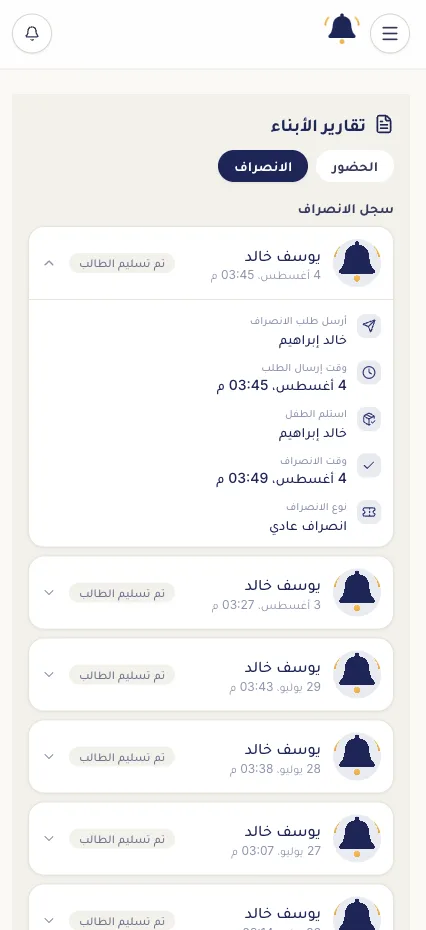
What it reveals makes protecting it a safety priority, not just privacy.
A child's place and time
It reveals when a student leaves and from which gate — sensitive if it reaches the wrong hands.
Who collects the student
The list of authorized receivers and their numbers needs tight control over who can view it.
The daily schedule
Recurring exit patterns can be misused if they are not protected by clear permissions.
Six pillars of data protection
Ask for these in any dismissal system you consider.
1) Role-based access
Each user sees only what their role requires — guard, branch manager, parent — with no exposure of data they do not need.
2) Encryption
Protect data in transit and at rest so it cannot be read if intercepted.
3) Audit log
Record who accessed what and when, so any access can be reviewed and accounted for.
4) Data minimization
Collect only what dismissal needs — less data means less risk.
5) Receiver control
Precise control over who is authorized to collect a student, with the ability to delegate and revoke.
6) Alignment with local requirements
A design that supports privacy and personal-data-protection requirements in the Kingdom.
Who sees what? A permissions example
Role-based access means no one sees more than they need.
| Role | Sees | Does not see |
|---|---|---|
| Guard | What is needed to verify at the gate | Data of other classes and campuses |
| Branch manager | Their campus only | Other campuses' data |
| Parent | Their own children only | Other students' data |
Mistakes that expose data
Avoid these when evaluating any system.
One shared account
Sharing a single login among staff removes any accountability or traceability.
Data on paper
Paper lists of parent names and numbers are easily lost and copied.
No access log
A system that does not record who viewed what makes a leak impossible to detect.
How JARASNA protects data
Privacy is built into the design, not added later.
Precise permissions
Each role sees only what it needs, with revocable delegation for receivers.
Encryption and audit log
Data protection and a full, reviewable record of every action and access.
Supports local requirements
Designed to support privacy and personal-data-protection rules in Saudi Arabia.
Why is dismissal data especially sensitive?
It reveals where a child is, when they leave, who collects them, and their daily schedule. Leaking this data affects not only privacy but the student's safety directly, so it needs stronger protection than ordinary administrative data.
What does role-based access mean?
Each user sees only what their role requires: a guard sees what is needed to verify at the gate, a branch manager sees their campus only, and a parent sees only their own children — so data is never exposed to those who do not need it.
Does JARASNA align with data-protection requirements in Saudi Arabia?
JARASNA is designed to support privacy and data-protection requirements in the Kingdom, with role-based access, encryption, and a full audit log. For contractual details and your school's specific compliance, contact the JARASNA team.
Give parents confidence in their data
Book a demo and ask us to walk through permissions and the audit log on your own school data.
Book a Demo