
Parent Communication App for Schools
Teacher conversations, circulars with read tracking, daily class updates and appointments — in one app your school owns.
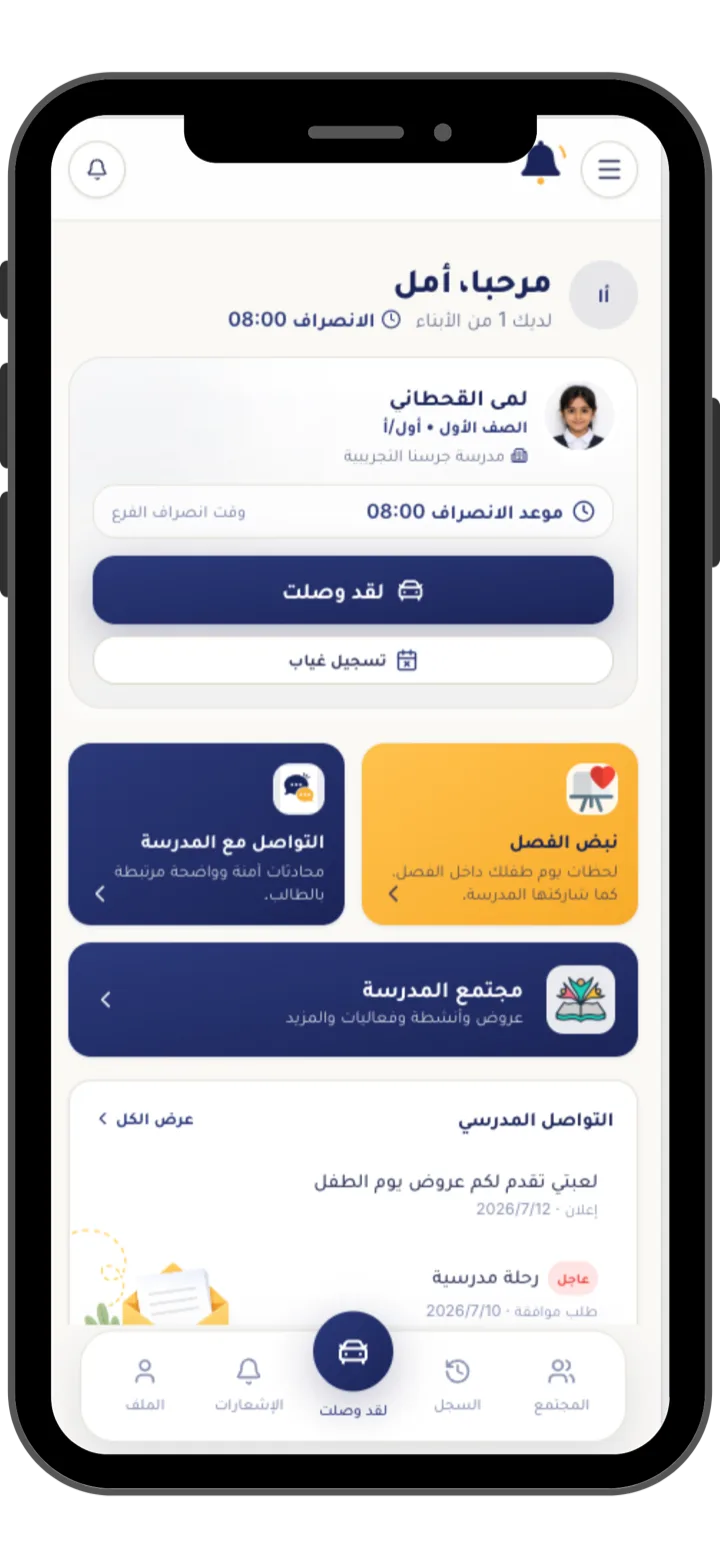
Where school–family communication breaks down
Groups with no privacy
Every family's number is visible to everyone, and a question about one student is asked in front of the whole class.
Circulars with no feedback
The message goes out, and the school doesn't know who read it, who approved the trip, or who needs a reminder.
The classroom is a closed box
Families don't see what their child learns each day, so they judge the school by the report card at the end of term.
Communication channels in JARASNA
Each channel has its own purpose — and all of them live in the same parent app.
Messaging
Questions to the class teacher or subject teacher that both parents can see, with photos, PDFs and documents, and each conversation assigned to the right staff member. School messaging.
Communication & circulars
An announcement, a circular that requires acknowledgement, or an approval request — for a branch, grade, class or specific students, with scheduling, read rates and approval rates. Circulars.
Class Pulse
Lessons, homework, activities and badges the teacher posts to the class or to one student, with a daily summary that only the class's parents can see. Class Pulse.
Appointments
Parents book a meeting with a teacher or the school from the available times, with no double-booking. Parent appointment booking (Arabic).
Absence and late-arrival notices
Excused and unexcused templates, sent once attendance is taken. Student absence messages.
School community
Events, trips and polls with registration and attendance confirmation. School community.
Why families trust a school that communicates clearly
A minute and a half on the everyday relationship between a school and its parents (in Arabic).

JARASNA | How can your school keep parents' trust and win more re-enrollments?
WhatsApp groups vs. an official school channel
| In WhatsApp groups | Impact on the school | In JARASNA |
|---|---|---|
| Family numbers are visible to every member | Privacy complaints and awkward moments for teachers. | In-app communication, with no group exposing families' numbers to each other. |
| A personal question asked in front of the whole class | Noise and side discussions. | Private questions with the relevant teacher, kept separate from general circulars. |
| The history stays with whoever owns the phone | The communication record is lost when a teacher leaves. | Conversations and circulars are kept by the school. |
| No proof anyone read it | You don't know who needs a follow-up. | Read rates, acknowledgements and approval requests. |
| Messages at any hour | Pressure on teachers after school hours. | Working hours for parent messages, set by the school. |
What it means for everyone involved
For school leadership
One official voice, metrics for average first response time and response-time compliance, and family ratings of your communication.
For teachers
Questions routed to them by class and subject, and working hours that protect their time after school.
For parents
One app for everything about their child: teacher messages, circulars, daily class updates and appointments.
Related pages
Go deeper into the part that matters to your school.
Frequently asked questions
What is a parent communication app?
It is an official channel the school owns that brings together teacher conversations, announcements and circulars, daily class updates, appointments and absence notices — instead of spreading communication across WhatsApp groups, calls and text messages.
Can JARASNA replace WhatsApp groups?
It offers an official alternative: private questions between a student's family and the teacher, and circulars whose reads are measured inside the app. The decision to close the groups is the school's.
Can we ask parents to approve a trip or activity?
Yes. Use the "Approval request" type: the primary guardian approves it, and the school sees the approval rate.
Are circulars sent by SMS or WhatsApp?
Circulars arrive inside the app and as mobile push notifications. Absence messages, however, can be sent via WhatsApp or the school's own SMS provider.
Can we set hours for parent messages?
Yes. The school sets working hours and decides what happens outside them: allow messages, show a notice, or block them — and, if it wants, count response time in working hours only.
How does a school measure communication quality?
With indicators such as average first response time and response-time compliance, parents' ratings of the school's communication, and read and approval rates for circulars.
Make your school's communication official, documented and measurable
Book a live demo and see messaging, circulars and Class Pulse in the parent app.
Book a live demo